
Gastroenterology Care in Ghaziabad for Common Digestive Problems
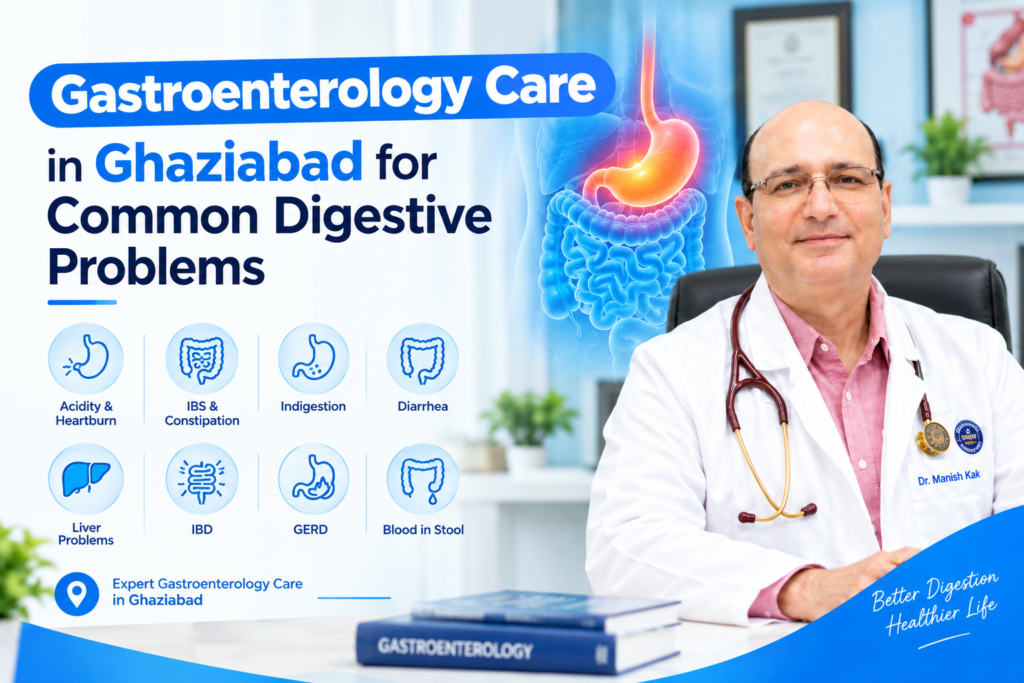
Digestive problems can affect daily comfort, appetite, sleep, and the ability to enjoy meals. Occasional indigestion may settle on its own, but symptoms that keep returning deserve attention. Gastroenterology focuses on the digestive tract, including the oesophagus, stomach, intestines, pancreas, gallbladder, and liver. Understanding common symptoms and knowing when to seek medical advice can help people avoid delays and receive care suited to their needs. Dr. Manish C. Kak provides digestive-health evaluation based on each patient’s symptoms and medical history.
Acidity, Heartburn, and Reflux
A burning feeling in the chest or throat, sour fluid coming into the mouth, or discomfort after meals may be related to acid reflux. Large meals, lying down soon after eating, and certain individual food triggers can make symptoms worse. Eating smaller portions and allowing time between dinner and bedtime may help some people. Frequent symptoms, difficulty swallowing, vomiting, or unexplained weight loss should be discussed with a healthcare professional rather than managed repeatedly with self-medication.
Bloating and Excess Gas
Bloating can happen when gas builds up in the digestive tract or when digestion and bowel movements are affected. Eating quickly, drinking fizzy beverages, constipation, food intolerances, and some digestive conditions may contribute. Keeping a short record of meals and symptoms can help identify patterns. If bloating is persistent, painful, or accompanied by vomiting, blood in the stool, fever, or unexplained weight loss, medical assessment is important.
Constipation and Changes in Bowel Habits
Constipation may involve hard stools, straining, or passing stool less often than is usual for a person. Adequate fluids, fibre-rich foods, and regular physical activity can support bowel health, although the right approach varies between individuals. A sudden or lasting change in bowel habits should not be ignored, especially when it occurs with abdominal pain, rectal bleeding, anaemia, or weight loss. A clinician can assess possible causes and recommend appropriate management.
Diarrhoea and Stomach Infections
Loose stools may result from infections, food-related illness, medicines, or other digestive conditions. Replacing lost fluids is important, especially for children and older adults. Seek medical advice if diarrhoea is severe or persistent, or if there is blood in the stool, high fever, significant abdominal pain, or signs of dehydration such as dizziness and very little urine. Do not take antibiotics or other prescription medicines without appropriate medical guidance.
Abdominal Pain and Indigestion
Abdominal discomfort can come from many sources, including indigestion, constipation, ulcers, gallbladder problems, or conditions outside the digestive system. The location, duration, severity, and timing of pain can help a doctor decide what assessment is needed. Sudden severe pain, a rigid abdomen, fainting, vomiting blood, or black tar-like stools require urgent medical attention. Recurrent discomfort should be evaluated rather than repeatedly covered up with over-the-counter remedies.
Liver and Digestive Health Are Connected
The liver supports digestion by producing bile and also processes nutrients and many substances carried in the blood. Some liver conditions cause few early symptoms, so people with risk factors or abnormal liver tests may need follow-up. A Liver Specialist in Ghaziabad can help assess concerns involving liver health when specialist evaluation is appropriate. Yellowing of the skin or eyes, abdominal swelling, or persistent unexplained symptoms should be reviewed by a healthcare professional.
What to Expect During a Gastroenterology Consultation
A consultation generally begins with questions about symptoms, eating habits, bowel movements, medicines, medical history, and family history. Depending on the findings, a doctor may recommend blood or stool tests, imaging, endoscopy, or another investigation. Not everyone needs every test; the plan should be based on the clinical assessment. Sharing how long symptoms have been present and what makes them better or worse can make the appointment more useful.
When Should You Seek Professional Care?
Consider a medical appointment if digestive symptoms persist, return frequently, interfere with daily activities, or require repeated self-treatment. Seek urgent care for severe or sudden abdominal pain, blood in vomit or stool, black stools, persistent vomiting, fainting, or signs of serious dehydration. People with ongoing conditions may benefit from a follow-up plan that tracks symptoms and treatment response. Avoid changing prescribed medicines without speaking to the clinician who manages your care.
Conclusion
Common digestive problems may have simple explanations, but persistent or severe symptoms can sometimes point to a condition that needs treatment. Balanced meals, adequate hydration, movement, and attention to symptom patterns can support digestive well-being, while professional assessment helps clarify when further tests are needed. Gastroenterology Care in Ghaziabad should be guided by the person’s symptoms, history, and clinical findings not by symptoms alone. Dr. Manish C. Kak can help patients understand their digestive concerns and discuss suitable next steps.